
“We hope that on Your journey, that you learn to the hear & see, the land speak to you with your own ears and not the ears of others, and that You can see the world with your own eyes and not the eyes of others”
Quote can be found in this link – Chris Hemsworth Disney Series “Limitless”.
The Vital Part of Our “Cultural Exchange” that is Involved with a developing a Spiritual Engagment with Nature
This essay has probably been the most difficult develop, mainly because we have found it hard, extremely hard to try and talk about how we go about creating a profound respect for nature. This is true when we consider how the current world generally does not feel, see and want to engage with those subjects. How to you create a cultural exchange for nature where there are definately elements of spirituality. We have looked at how tribes all over the world make caring for the land a powerful part of how they live and communities. Our problem is how do we mix the modern literal beliefs with more spiritual aspects of respect for nature In this essay we are aim assess these problems.

We at Commonground Rewilding take a different view. Its one born from the words themselves from the idea of truly listen and seeing the world around us. Its about understanding where your true self is at the moment. We live in a world where we need to learn to look inwardly much more and see where our own self is in-realtion to our connection with nature and the environment. To us a Cultural Exchange is something where we start to communicate and talk between different people and groups around us. It could be conservations or they could grow into something much more. A community is a form of cultural exchanges. The same is true if different communities come together. However in todays world these types of communities don’t really any exist anymore. To achieve more community cohesion that work together you need to create a spark that lights up the issues, there solution and most important the will to act.

Join the movement!
Re-Imagine communities, integrate nature, and build a sustainable future with us.
Can We Incorporate Spiritual Belief Structures into the Way We Solve Our Climate Related Problems.
We all follow many different forms of rituals in our lives, some may be around aspects of religion, others may be around how our communities. That is not always the case. We all have rituals in our lives.
“Rituals are defined as repetitive behaviors performed by social groups that have important social, psychological, and symbolic dimensions, and they utilize standardized objects, movements, and sounds without a direct technical effect.”
Today we have lose social connections that once allowed us to work together. Social connections are being lost and as a result group understanding and function is being eroded. This is especially true when it comes working together to solve our climate and biodiversity problems. Our social rituals have been eroded to such a degree that we find it difficult if not impossible to work together to solve our serious social problems.
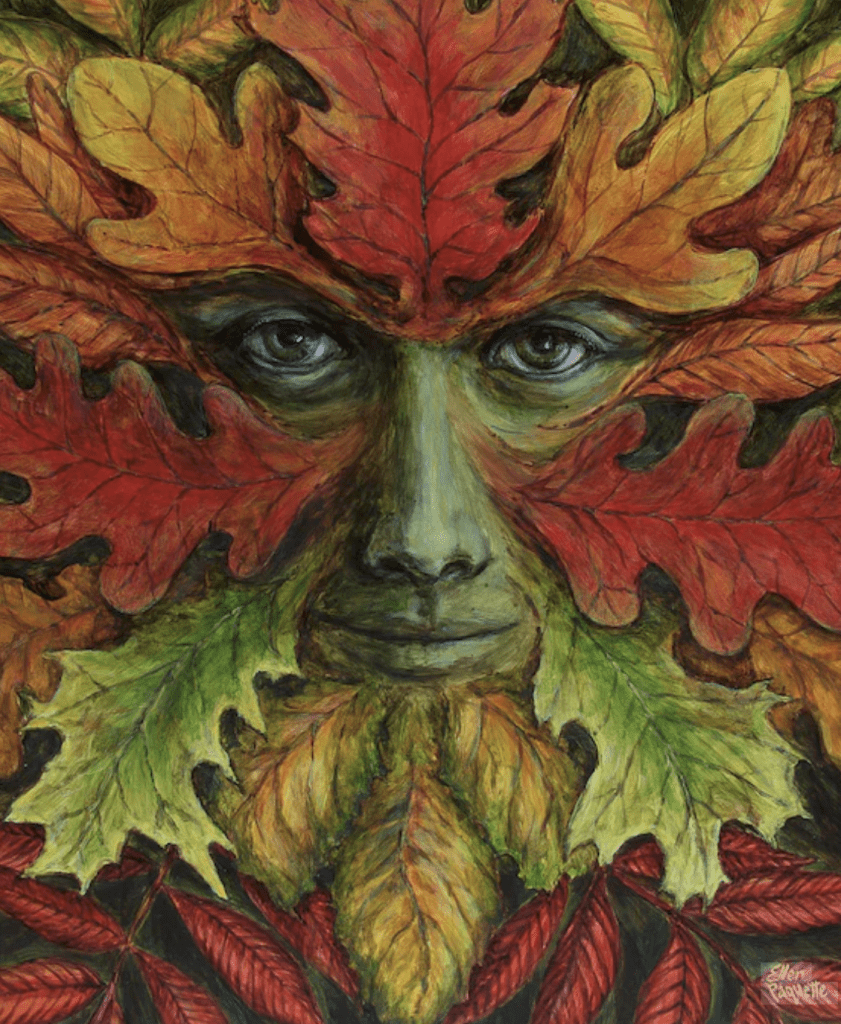
Ancesteral Tribes and Beliefs like the Green Man or Tāne-Mahuta God of the Forests in Maori Mythlogy
In the past human society worked in relatively small groups or tribes. Each tribe had there own way of working and growing. It was not until at least the period of the enlightenment when human society began to grow and develop that we began to become extremely successful in developing our cognitivity creativity. How ever recently this ability has began to decline mainly due to our decline in our social connections
Today our Cognitive Diversity is as threatened as our Biodiversity is.
Ben Dunlap – Ted talk
There are however examples from which we can get a better idea and learn why the nevironment should be part of how our societies work and are structured. To achieve this we need to understand what we mean by rituals. We don’t mean sort of religious rituals but develop rituals that bind our societies together.


Shinto – the distinct indigenous religion of Japan ….
… is centered on the worship of nature spirits called kami, but it’s often seen by practitioners as more of a cultural way of life or set of traditions than a formal “religion” with strict dogma, coexisting easily with Buddhism and focusing heavily on rituals and purity. It’s an ancient belief system, not founded by a single person, and revolves around harmony with nature and ancestral reverence, making it deeply intertwined with Japanese identity and daily life.
We are not suggesting we all adhere to Shintoism but Shinto is about this world, nature, purity, and community. Its not about what nearly all other religions are about, is after-life or salvation. What we at Commonground are suggesting here we need to creaste a sort of spirtualism around caring for the world we live.
Understanding how Shinto works can help us create our own structures both individually and within communities. At Commonground we want to incorportate aspects of `Shinto in to how we create an attitudes and ethos that underlies all we do
So What are We Suggesting here.
At Commonground we want to create ways to internalise a belief structure in how we live. At present we have absolutely not idea of how to do this but we created a starting platform across a range of concepts that we think we can work with and adapt if change is needed
Coming soon.